

A Metro tour of Sunderland City Centre and St Peter’s

Looking to explore a city rich in history with architectural significance? Look no further than Sunderland, the city by the sea. Here we take you on a Metro tour of the area.
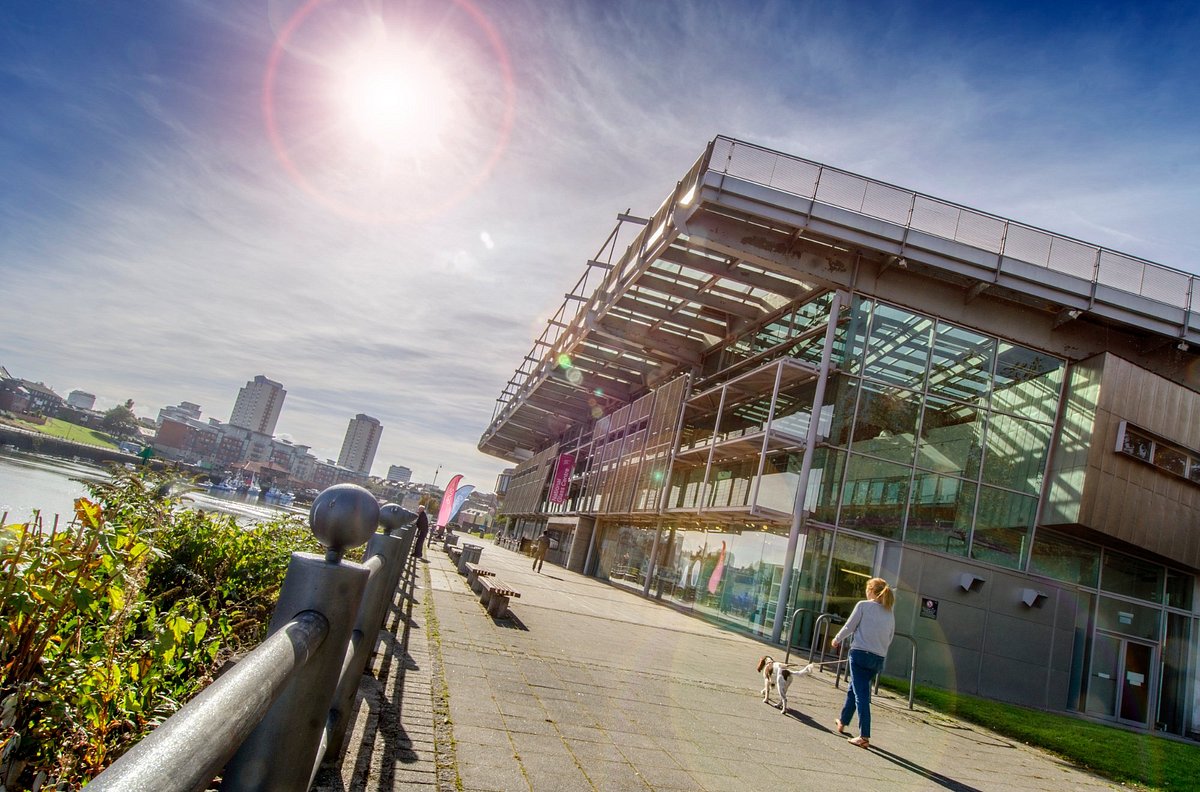
Disembark at St Peter’s Metro station and head eastwards down Dame Dorothy Street for ten minutes until you come to St. Peter’s Way. There you can walk past St Peter’s Monastery and find the Glass Centre by the side of the River Wear.
1.National Glass Centre and St Peter’s Church

Sunderland has a long legacy of glassmaking. In 674AD, the city’s patron saint, Benedict Biscop, commissioned French glaziers to make a stained glass window for his new monastery in Monkwearmouth, which was the first stained glass in the UK.
This unique building was opened in 1998 and marks the site of the first glass production site in the UK. The design of the building was the subject of the Royal Institute of British Architects competition for this complex building typology compresses all its disparate functions within one structure and explores the possibilities of them sitting side by side – a working factory, a series of independent workshops, for smaller scale designer glass production, gallery spaces, cafe, restaurant and other public facilities – under a walk on roof, plus a public space incorporating glass overlooking the River Wear.
For more details about visiting the glass centre in Sunderland visit National Glass Centre - Sunderland Culture
Now, head back towards St Peter’s Metro Station. You can either go over the Wearmouth Bridge and enjoy the panoramic views of the Wear’s various fishing boats and take in the ever-changing landscape of the southern bank of the river, or jump back on the Metro to Sunderland Station.
2. Elephant Tea Rooms / Fawcett Street Sunderland
On the east side of Sunderland station is Fawcett Street, where we can continue our tour.
There is a common phrase when looking at architecture - "Look up".
Many shop fronts and the historic buildings above were saved from demolition in the post war clean up of Sunderland. Look up on the corner of Fawcett Street and see the Elephant Tea Rooms building has been now been successfully restored. Mackie’s Corner has also recently been renovated, providing a row of brand new independent businesses including fashion stores, cafés, delicatessen and beauty parlours.
Historic Fawcett Street was the premium shopping street in post-war Britain with gas showrooms and gentlemen’s outfitters.
3. Sunderland Museum and Winter Gardens and Mowbray Park
Heading south on Fawcett seat brings you to the wonderful Sunderland Museum and Winter Gardens.
The frontage of this museum dates back to 1879, based on similar designs to the Hyde Park Crystal Palace. The winter gardens at the back were completely destroyed in the Second World War. It wasn’t until 2001 that the modern winter gardens were constructed to replicated what the war destroyed.
Mowbray Park is often described as one of the finest parks in the North East with symmetrical flower beds, a duck pond and surprising steep inclines for those seeking a more challenging stroll. In the summer months there are regular family events held on the grass. For the schedule of events visit My Sunderland
4. Sunderland Minster

Walking westwards down Holmeside for a few minutes brings you to Crowtree Road, where a right turn takes you to High Street West and Sunderland Minster
The surrounding area is home to Bishopwearmouth conversation area, a new initiative to recreate restore original features of the area dating back to 940AD. This has so far involved the creation of Minster Park, Restoration of the historic Empire Theatre, Dun Cow Pub and the Peacock Pub. This scheme aims to create a new public space in the heart of the city and a recognition of the history of the Sunderland Minster Area.
Read more about Minster Park.
5. Sunderland Empire
Opposite the north side of the Minster is The Sunderland Empire. Opened in 1907, it is a fine example of Edwardian architecture. A huge host of stars have performed here over the years, including The Beatles and Charlie Chaplin. The Empire is a Grade II listed building and is a significant domed landmark for the city.
Go along to a backstage tour ( limited availability) or check our the show guide.
Next to the Empire is the Dun Cow, another wonderfully ornate Grade II listed building that allows you to step back in time. This is Sunderland’s cultural quarter, home to several bars and restaurants that are well worth a visit.
From here you can walk for ten minutes back to Sunderland station.
Want to go back even further in time? Look out for our tour of Old Sunderland, only a 15 minute walk from the city centre.